
Miyazaki Mango Guide: Taste, Price and Authenticity
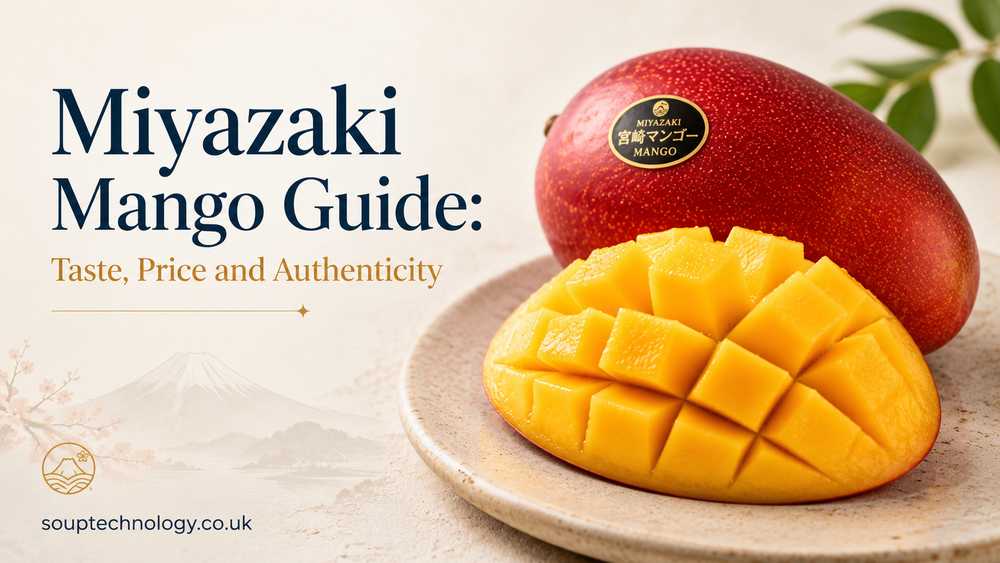
The miyazaki mango is a premium Japanese fruit known for its deep red skin, rich sweetness, smooth flesh, and careful production. It is mainly grown in Miyazaki Prefecture on Japan’s Kyushu island. The highest-grade fruits are sold as Taiyo no Tamago, meaning “Egg of the Sun,” and must meet strict standards for weight, color, shape, and sugar content.
What Makes This Japanese Mango Different?
Growers commonly cultivate the Irwin mango, an apple-mango variety with red or purple-red skin. Unlike many mangoes picked before full ripeness, these fruits mature on the tree.
Each fruit is supported in an individual net. When fully ripe, it falls naturally into the net rather than onto the ground. This protects the delicate skin while allowing its sweetness and aroma to develop fully.
The main harvest runs from April to August. Warm weather, greenhouse management, pruning, and careful fruit selection help farmers achieve consistent quality.
What Is Taiyo no Tamago?
Not every mango grown in Miyazaki receives the “Egg of the Sun” label. Taiyo no Tamago is a premium certification, not a separate mango variety.
To qualify, a fruit must weigh at least 350 grams, reach a sugar content of 15 percent or higher, and have an attractive shape with strong red coloring. Every fruit is inspected and graded before sale.
This distinction matters because some sellers use miyazaki mango for locally grown Irwin fruit with no connection to Japan’s official grading system. Such mangoes may taste good, but they are not automatically genuine Taiyo no Tamago.
Why Is Miyazaki Mango So Expensive?
The high price reflects limited supply, labor-intensive cultivation, strict grading, premium presentation, and Japan’s luxury fruit-gifting culture. Farmers may manage each fruit separately, adjusting sunlight exposure and protecting it from damage.
Viral prices usually come from ceremonial first-of-season auctions. In April 2026, a premium pair reached ¥550,000 at an opening auction in Miyazaki. That figure does not represent the everyday price of every fruit. Regular grades cost less, although exported examples can remain expensive because of scarcity, careful handling, and shipping.
Taste, Texture, and Best Uses
A ripe miyazaki mango has juicy, soft flesh, intense sweetness, little fibre, and a fragrant tropical aroma. Its flavor is generally rich and rounded rather than sharply acidic.
Because it is an expensive fruit, it is usually served fresh. Chill it lightly, cut around the flat seed, score the flesh into cubes, and turn the skin outward.
It also pairs well with plain yogurt, panna cotta, vanilla ice cream, or a simple fruit plate. Strong sauces or heavy spices may hide its natural flavor.
How to Buy and Store It
Choose fruit with even coloring, unbroken skin, a sweet aroma, and slight softness near the stem. Avoid leaking juice, deep bruises, damaged skin, or fermented smells.
Keep unripe fruit at room temperature until it becomes aromatic and gently soft. Once ripe, refrigerate it and eat it within a few days.
To check authenticity, review the country of origin, producer, grade, and certification instead of trusting a high price or red appearance alone.
Frequently Asked Questions
Is Miyazaki mango the world’s most expensive mango?
It is often marketed that way, but there is no permanent global price ranking. Record auction bids are promotional events and should not be confused with normal retail prices.
Is it healthier than ordinary mangoes?
It contains nutrients commonly found in mangoes, including vitamin C, fibre, natural sugars, and vitamin A precursors. Its luxury status does not make it dramatically more nutritious than other quality varieties.
Can it be grown outside Japan?
Yes. Irwin mango trees grow in several countries. However, fruit grown elsewhere is not automatically an officially certified Miyazaki product or Taiyo no Tamago.
Why is the fruit red?
The color comes from the Irwin variety’s natural pigmentation and exposure to sunlight during ripening. Color matters for grading, along with sweetness, weight, shape, and overall condition.
Conclusion
The miyazaki mango is valuable because of its controlled cultivation, tree-ripened harvesting, strict quality checks, and limited premium supply. Buyers should judge it by its origin, certification, freshness, and taste—not by viral auction headlines alone.