Mini LED vs QLED: Which TV Technology Is Better Today?
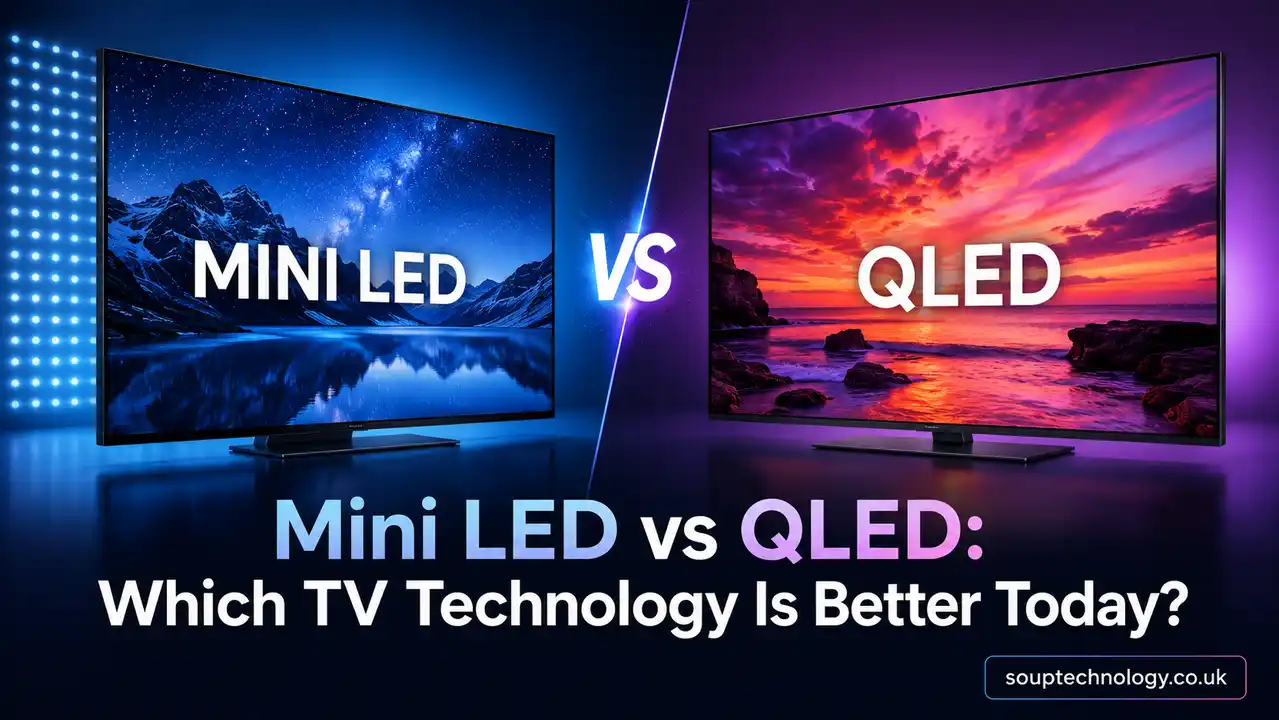
When comparing mini led vs qled, the main difference is simple: QLED improves color, while Mini LED improves backlight control. QLED televisions use a quantum-dot layer to create bright, accurate colors. Mini LED televisions use thousands of smaller LEDs behind the LCD panel, allowing finer local dimming and stronger contrast. Some premium TVs combine both, so the terms are not always opposites.
What Is a QLED TV?
QLED stands for quantum-dot light-emitting diode. Despite the name, most QLED TVs are still LCD televisions that need an LED backlight. The quantum-dot layer converts light into controlled red and green colors, helping the screen maintain a wide color range at high brightness.
QLED works well in bright living rooms. Sports, animated films, documentaries, and daytime television can look vivid without appearing washed out. However, performance still depends on the panel, backlight, processor, and local dimming system.
What Is a Mini LED TV?
Mini LED describes the backlight rather than the color layer. Manufacturers place many smaller LEDs behind the screen instead of using fewer conventional LEDs. These lights are grouped into dimming zones, giving the TV more control over bright and dark areas.
The result can be deeper blacks, brighter highlights, and less light leakage. This is useful for dark films, HDR content, and games that combine bright effects with shadowy scenes.
Main Picture Quality Differences
Brightness and HDR
Both can become very bright, but advanced Mini LED models often have the advantage. Their dense backlights can produce strong highlights while dimming nearby dark areas. Standard QLED models may also be bright, but HDR quality varies significantly between models.
Contrast and Black Levels
Mini LED normally wins for contrast because it can dim smaller screen sections. This reduces the grey appearance often visible in dark scenes on basic LED TVs.
Blooming, or a glow around bright objects on black backgrounds, can still occur because Mini LED pixels are not individually self-lit.
Color Performance
QLED has the clearer advantage in color volume. Quantum dots help preserve rich colors at higher brightness. For football, cricket, cartoons, and colourful games, a good QLED can deliver a vivid and realistic picture.
Which Is Better for Gaming?
For gaming, the technology label is not enough. Look for a 120Hz or 144Hz refresh rate, HDMI 2.1, variable refresh rate, auto low-latency mode, and low input lag.
Mini LED is often better for cinematic games because of improved HDR and shadow detail. A well-equipped QLED may offer better value for competitive gaming when it includes the required refresh rate and ports at a lower price.
Price and Everyday Value
QLED televisions are available across more price ranges. They suit buyers who want strong brightness and color without paying for an advanced backlight.
Mini LED TVs usually cost more because their lighting and dimming systems are more complex. The extra cost makes sense for frequent HDR viewing, mixed lighting, or a large screen where stronger contrast matters.
FAQs
Is Mini LED better than QLED?
Mini LED is usually better for contrast and HDR control. QLED mainly improves color and brightness. A model combining both can provide the strongest overall result.
Does Mini LED have burn-in risk?
Mini LED TVs use LCD panels and do not face the same permanent burn-in concerns associated with some self-emissive displays.
Is QLED good for bright rooms?
Yes. Strong brightness and color performance make QLED suitable for rooms with daylight or several lamps.
Can a TV use both technologies?
Yes. Mini LED controls the backlight, while QLED refers to the quantum-dot color layer. Many premium models combine them.
Conclusion
In the mini led vs qled decision, choose QLED for vivid color and wider budget choice. Choose Mini LED for stronger contrast, deeper blacks, and more impressive HDR.
Do not buy based on the label alone. Compare dimming performance, refresh rate, ports, processing, and reliable model reviews before making your final choice.