
Soup Technology: Definition, Working Process, Applications
Introduction: What Is Soup Technology?
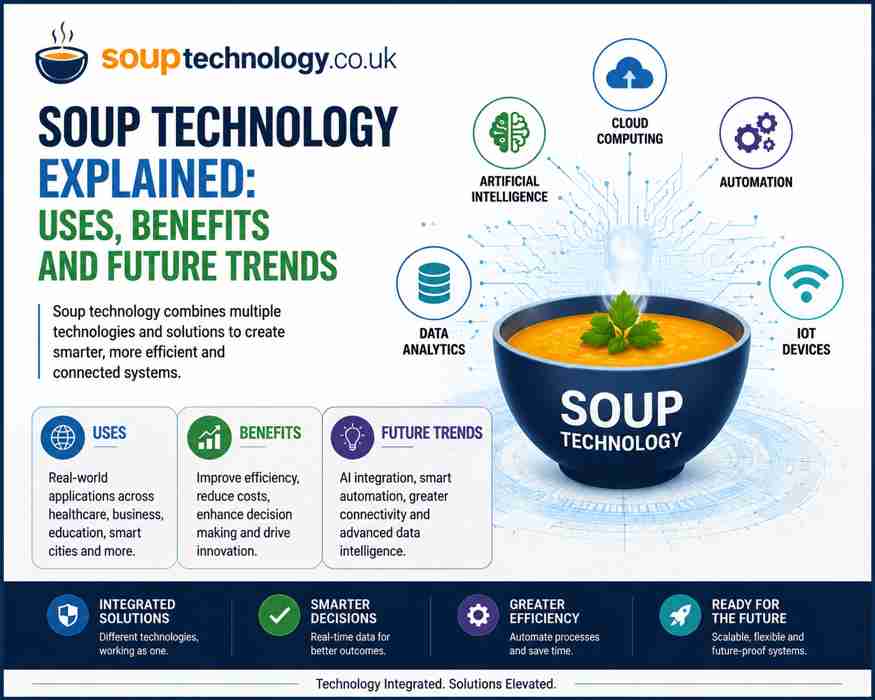
Soup technology is an approach that combines multiple technologies, tools, and systems to create a more powerful and connected solution. Instead of depending on a single technology, soup technology brings different digital components together, allowing them to work as one integrated system.
In simple terms, it works like a mixture of different ingredients in soup, where each element contributes to the final result. In the technology world, these “ingredients” can include artificial intelligence, cloud computing, automation, data analytics, and connected devices.
Today, organizations use soup technology concepts to build smarter platforms, improve efficiency, and solve complex digital challenges.
How Does Soup Technology Work?
Soup technology works through the combination and coordination of multiple technologies. Each technology performs a specific function while sharing information with other systems.
Integration of Multiple Technologies
The core idea behind soup technology is seamless integration. For example, a smart business platform may combine:
- Artificial intelligence for analysis and predictions
- Cloud computing for flexible storage
- Big data for handling large information sets
- Automation tools for improving workflows
When these technologies work together, businesses can create faster and more intelligent solutions.
Data Collection and Processing
A major part of soup technology is collecting information from different sources and transforming it into useful insights.
For example, smart devices can collect user data, cloud platforms can store it, and AI systems can analyze patterns to support better decisions.
Key Features of Soup Technology
Flexible Technology Framework
One important feature of soup technology is flexibility. Businesses can combine different technologies according to their specific requirements instead of using a fixed system.
Scalability and Growth
Modern organizations need systems that can expand over time. Soup technology allows companies to add new tools and services without completely rebuilding their infrastructure.
Intelligent Automation
By combining AI and automation, soup technology helps reduce repetitive tasks and improves operational accuracy.
Real-Time Information Processing
Connected systems can analyze data instantly, helping businesses respond quickly to customer needs and market changes.
Benefits of Soup Technology
Improved Business Efficiency
The combination of different technologies helps organizations complete tasks faster and reduce unnecessary manual processes.
Better Decision Making
With access to connected data, companies can identify trends, understand customer behavior, and make more accurate decisions.
Cost Optimization
Although implementation may require investment, soup technology can reduce long-term operational costs through automation and improved resource management.
Enhanced Digital Experiences
Integrated systems create smoother experiences for users by connecting multiple services into one platform.
Applications of Soup Technology
Healthcare Industry
Healthcare organizations can use soup’s technology by combining AI, medical databases, cloud systems, and smart devices.
For example, wearable health monitors can collect patient information while AI tools analyze the data and help healthcare professionals make informed decisions.
Business and Enterprise Systems
Companies use integrated technology solutions for customer service, cybersecurity, marketing automation, and data management.
A company may combine AI chatbots, customer relationship management software, and analytics platforms to improve customer support.
Smart Cities
Smart city projects use connected sensors, data platforms, and automation systems to improve transportation, energy management, and public services.
Education Technology
Online education platforms combine video learning, AI-based recommendations, and analytics tools to provide personalized learning experiences.
Challenges of Soup Technology
System Complexity
Managing multiple technologies together can be challenging. Organizations need skilled professionals to maintain system compatibility and performance.
Security Concerns
Because multiple systems are connected, cybersecurity becomes a major concern. Strong protection methods are necessary to prevent unauthorized access.
Implementation Costs
Building an integrated technology environment may require significant investment in software, infrastructure, and training.
Future Trends of Soup Technology
The future of soup’s technology will be strongly influenced by artificial intelligence, automation, and emerging digital innovations.
Companies are expected to create more intelligent ecosystems where different technologies communicate automatically and improve themselves through machine learning.
The growth of IoT, cloud computing, blockchain, and advanced AI models will further expand the possibilities of soup’s technology in different industries.
As businesses continue searching for flexible and efficient solutions, integrated technology approaches will become increasingly important.
FAQ About Soup Technology
What is soup technology used for?
Soup technology is used to combine different technologies to create efficient solutions for industries such as healthcare, business, education, and smart cities.
Why is important?
Soup technology helps organizations improve productivity, automate processes, and use multiple digital tools together for better results.
Is soup technology related to artificial intelligence?
Artificial intelligence can be a component of soup’s technology, but the concept focuses on combining multiple technologies into one connected system.
What are examples of soup’s technology?
Examples include AI-powered business platforms, smart healthcare systems, IoT networks, and cloud-based automation solutions.