Introduction
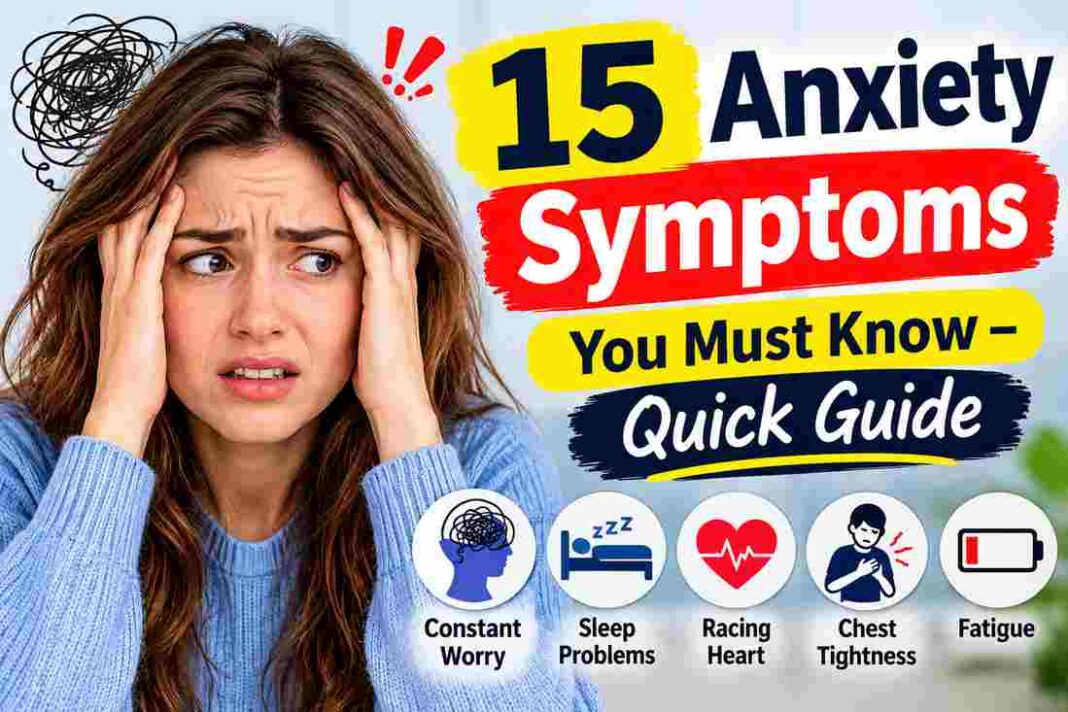
Anxiety is a normal human response to stress, but when it becomes persistent, intense, or interferes with daily life, it may signal an anxiety disorder. Recognizing the early warning signs can help you seek help before symptoms worsen. This guide outlines 15 common Anxiety Symptoms, explains why they matter, and offers practical steps for managing them.
1. Constant, Excessive Worry
Feeling on edge all the time, even when there’s no obvious trigger, is a hallmark of generalized anxiety. The worry often feels uncontrollable and can dominate conversations and thoughts.
2. Racing or Intrusive Thoughts
Rapid, repetitive thoughts that jump from one worry to another can create a mental “noise” that’s hard to quiet. These thoughts may be about future catastrophes or past mistakes.
3. Restlessness or Feeling “On Edge”
A persistent sense of unease, as if you’re always ready to bolt, can manifest as fidgeting, tapping, or an inability to sit still.
4. Physical Tension and Muscle Pain
Tightness in the neck, shoulders, or jaw, headaches, and general body aches are common physical manifestations of anxiety.
5. Rapid Heartbeat or Palpitations
An elevated heart rate, fluttering sensations, or a pounding chest can occur even when you’re at rest, often accompanied by shortness of breath.
6. Shortness of Breath or Hyperventilation
Feeling like you can’t catch your breath, especially during stressful moments, can trigger a cycle of panic and further breathing difficulties.
7. Sleep Disturbances
Difficulty falling asleep, frequent awakenings, or restless nights can be both a symptom and a consequence of anxiety, creating a vicious cycle.
8. Digestive Issues
Stomachaches, nausea, diarrhea, or irritable bowel syndrome symptoms often flare up when anxiety spikes, reflecting the gut‑brain connection.
9. Panic Attacks
Sudden, intense episodes of fear that peak within minutes, accompanied by chest pain, dizziness, or a sense of impending doom, are a clear red flag.
10. Avoidance Behaviors
Steering clear of social situations, work tasks, or places that trigger anxiety can limit daily functioning and reinforce isolation.
11. Irritability or Mood Swings
Quick shifts from calm to frustration or anger, especially over minor irritations, can strain relationships and self‑esteem.
12. Fatigue and Low Energy
Chronic anxiety drains mental and physical resources, leading to persistent tiredness that doesn’t improve with rest.
13. Difficulty Concentrating
An inability to focus on tasks, forgetfulness, or feeling mentally “foggy” can impair performance at work or school.
14. Self‑Doubt and Low Self‑Confidence
Constant questioning of your abilities, feeling inadequate, or fearing judgment can erode self‑worth over time.
15. Substance Use or Over‑Reliance on Caffeine
Using alcohol, nicotine, or stimulants to cope with anxiety can create a harmful cycle and mask underlying issues.
Why These Symptoms Matter
- Early Detection: Spotting symptoms early can lead to timely intervention, reducing the risk of chronic anxiety or comorbid conditions such as depression.
- Impact on Daily Life: Persistent anxiety can impair work performance, relationships, and overall quality of life.
- Risk of Escalation: Untreated anxiety may progress to panic disorder, social anxiety disorder, or other mental‑health challenges.
When to Seek Professional Help
- Symptoms last more than a few weeks and interfere with daily functioning.
- You experience frequent panic attacks or intense fear episodes.
- Anxiety causes significant sleep problems, digestive issues, or physical pain.
- You feel isolated, avoid social interactions, or notice a decline in work or school performance.
- You use alcohol, drugs, or caffeine excessively to manage anxiety.
Practical Steps to Manage Anxiety
| Strategy | How It Helps |
|---|---|
| Mindful Breathing | Slows heart rate and calms the nervous system. |
| Progressive Muscle Relaxation | Reduces physical tension and promotes relaxation. |
| Regular Exercise | Releases endorphins and improves mood. |
| Sleep Hygiene | Establishes a consistent bedtime routine to improve sleep quality. |
| Cognitive‑Behavioral Techniques | Identifies and reframes negative thought patterns. |
| Limit Caffeine & Alcohol | Reduces physiological triggers of anxiety. |
| Social Support | Sharing concerns with trusted friends or family can alleviate isolation. |
| Professional Therapy | CBT, exposure therapy, or medication can address underlying causes. |
Frequently Asked Questions
Q1: Can anxiety be cured?
A: While anxiety disorders often require ongoing management, many people achieve significant relief through therapy, medication, and lifestyle changes.
Q2: Are anxiety symptoms the same for everyone?
A: Symptoms vary by individual and type of anxiety disorder. Some people experience more physical symptoms, while others have predominantly cognitive or emotional signs.
Q3: How long does it take for anxiety treatment to work?
A: Improvement can begin within a few weeks of consistent therapy or medication, but full recovery may take several months.
Q4: Can anxiety be inherited?
A: Yes, a family history of anxiety or depression increases risk, but environmental factors also play a significant role.
Q5: Is it safe to self‑treat anxiety with over‑the‑counter supplements?
A: Some supplements (e.g., magnesium, omega‑3s) may help, but they should complement, not replace, professional care.
Takeaway
Recognizing the 15 common anxiety symptoms is the first step toward reclaiming control over your mental health. If you notice several of these signs, consider reaching out to a mental‑health professional for assessment and personalized treatment. Early intervention can prevent anxiety from escalating and help you lead a more balanced, fulfilling life.