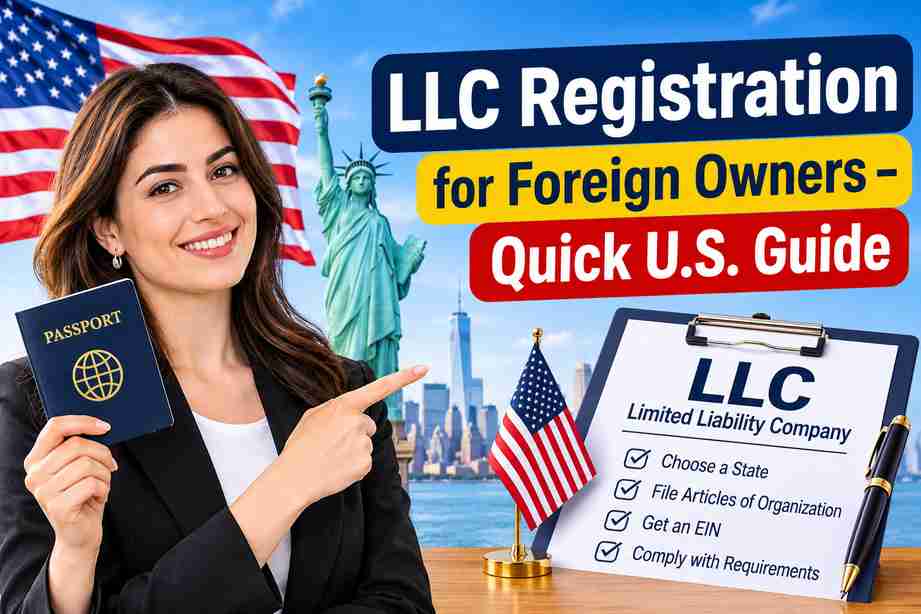
The journey of llc registration begins with a clear understanding of why a foreign entrepreneur would choose a U.S. limited liability company. An LLC offers the dual advantage of protecting personal assets while allowing profits to flow directly to members’ tax returns, thereby avoiding the double taxation that can accompany traditional corporations. For non‑U.S. residents, the process is straightforward: select a state, file the Articles of Organization, appoint a registered agent, and secure an EIN. Once the state approves the filing, the LLC is officially recognized and can immediately engage in U.S. commerce, open bank accounts, and enter contracts.
LLC meaning
“LLC” stands for Limited Liability Company—a hybrid entity that blends the liability protection of a corporation with the operational flexibility of a partnership. This structure is especially appealing to foreign owners who wish to maintain a clear separation between personal and business finances while enjoying a simplified management framework.
Limited liabilities company meaning
The phrase limited liabilities company meaning underscores the core benefit of the entity: members are insulated from personal liability for the company’s debts and legal obligations. This shield is critical for international investors who may be concerned about cross‑border exposure and want to safeguard personal assets such as homes, vehicles, and savings.
What does llc stand for
When asked what does llc stand for, the answer is “Limited Liability Company.” Knowing this abbreviation is essential for communicating with banks, suppliers, and tax authorities, ensuring that all parties recognize the legal nature of the business.
Limited liability company
A limited liability company is a versatile business structure that offers members limited personal liability, flexible management, and pass‑through taxation. For foreign owners, this means they can operate a U.S. business without the burdensome formalities of a corporation, such as mandatory board meetings and extensive record‑keeping.
Difference between llc and corporation
The difference between llc and corporation lies in ownership, taxation, and compliance. Corporations issue shares, have a board of directors, and are subject to corporate tax (with the possibility of double taxation). LLCs, by contrast, have members instead of shareholders, enjoy default pass‑through taxation, and require fewer ongoing formalities. Understanding this distinction helps foreign entrepreneurs choose the structure that best aligns with their growth strategy and tax objectives.
Register an llc
To register an llc, foreign owners must file Articles of Organization with the chosen state’s Secretary of State, pay the filing fee, appoint a registered agent with a U.S. address, and obtain an EIN from the IRS. Many states offer online filing portals that expedite the process, allowing international founders to complete registration from abroad.
LLC finder
An llc finder is an online tool that searches state databases for available LLC names and checks the status of existing entities. Using an llc finder early in the planning stage prevents naming conflicts and ensures that the desired business name is unique and compliant with state regulations.
Free llc
The term free llc often refers to promotional packages that bundle the cost of filing an LLC with additional services such as a registered agent, operating agreement templates, or legal consultations. While the filing fee itself is not free, these bundled offers can reduce overall startup costs for foreign owners who need a quick, cost‑effective launch.
Search llc
Search llc involves looking up public records of existing LLCs—such as formation dates, registered agents, and status—through state portals or commercial databases. This function is invaluable for due diligence, verifying potential partners, or confirming that a chosen name is truly available before filing.
Is an llc a corporation
Is an llc a corporation? The answer is no. An LLC is a distinct legal entity that blends features of both corporations and partnerships. While it offers limited liability like a corporation, it does not require a board of directors or the issuance of shares, and it typically enjoys simpler compliance and tax treatment.
LLC definition
The llc definition is a concise description: a limited liability company is a business structure that protects owners from personal liability for company debts, allows flexible management, and offers pass‑through taxation unless the owners elect corporate tax treatment. This definition is essential for legal filings, tax returns, and business contracts.
LLC vs inc
LLC vs inc compares a limited liability company to a corporation (often abbreviated as “Inc.”). Key distinctions include ownership structure (members vs shareholders), taxation (pass‑through vs corporate), and regulatory burden (fewer formalities for LLCs). Foreign owners often choose an LLC for its simplicity and flexibility, especially when starting small or operating remotely.
Corporation vs llc
The corporation vs llc debate centers on the trade‑offs between formal corporate governance and the streamlined operations of an LLC. Corporations provide a clear hierarchy and potential for raising capital through stock issuance, while LLCs offer greater operational flexibility and lower ongoing compliance costs—an attractive combination for international entrepreneurs.
How do i start an llc
To how do i start an llc, follow these steps:
- Choose a state (Delaware, Nevada, Wyoming are popular for their business‑friendly climates).
- Verify name availability using an llc finder.
- File Articles of Organization online with the state’s Secretary of State.
- Appoint a registered agent with a physical U.S. address.
- Obtain an EIN from the IRS (online or by fax).
- Draft an operating agreement (recommended for clarity on ownership and profit distribution).
- Register for state taxes (sales, franchise, etc.) and obtain any necessary business licenses.
- Open a U.S. bank account using the EIN and LLC certificate.
By following these steps, foreign owners can establish a legally compliant, tax‑efficient, and operationally flexible U.S. business that positions them for growth and success.