
Tech Deck Guide: Fingerboarding Tips, Tricks & Best Decks
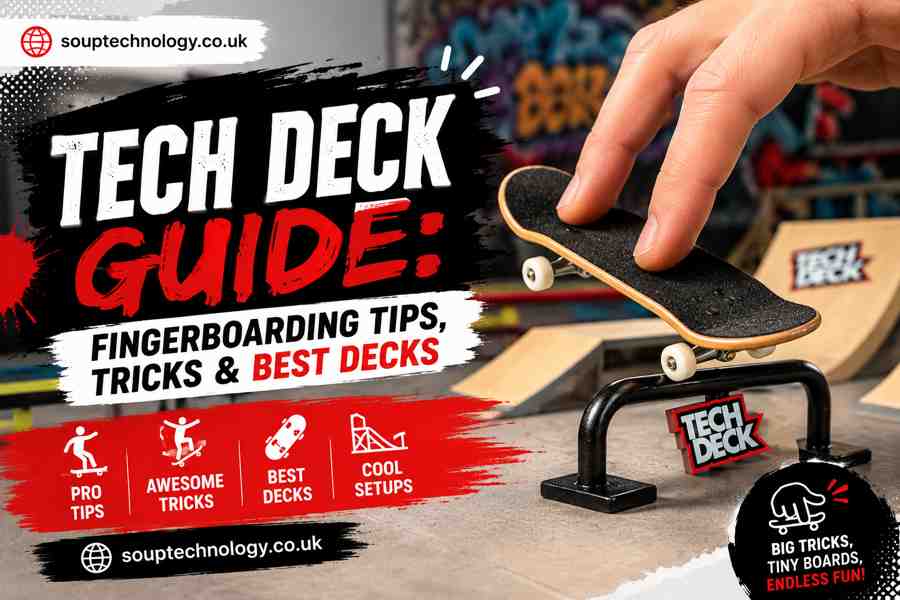
Tiny skateboards, huge fun. That’s the simplest way to describe Tech Decks — the pocket-sized fingerboards that let anyone pull off skate tricks with just two fingers. Whether you found one in a cereal box as a kid or you’re getting into the hobby as an adult, this guide covers everything you need to know: how they work, which tricks to learn first, which models are worth buying, and how to keep your deck rolling smoothly for years.
What Is a Tech Deck?
A Tech Deck is a miniature, realistic replica of a skateboard, usually about 96mm long, built with real griptape, a wooden or plastic deck, metal trucks, and spinning wheels. Unlike a toy in the traditional sense, Tech Decks are modeled closely after full-size skateboards, right down to licensed graphics from real skate brands like Baker, Element, and Toy Machine.
The appeal is simple: you can practice skateboard-style tricks — ollies, kickflips, grinds, and manuals — using your index and middle fingers instead of your feet. It’s low-cost, low-risk, and surprisingly addictive once the muscle memory kicks in.
How to Use a Tech Deck
Getting started is easier than it looks. Place the deck on a flat, smooth surface (a desk or table works best) and rest your index and middle fingers near the front and back trucks, roughly where your feet would sit on a real board. Push off gently to get it rolling, then practice basic finger placement before attempting any tricks.
Grip control matters more than speed at first. Keep your fingers loose but steady, and get comfortable flicking the board upward with a quick snap of the wrist — this motion is the foundation of nearly every trick you’ll learn later.
Basic Tech Deck Tricks for Beginners
Start with these foundational moves before moving on to anything flashy:
- Ollie — The core trick of fingerboarding. Snap the tail down while flicking your front finger upward to pop the board into the air.
- Manual — Balance the board on its back wheels only, rolling forward without tipping over.
- Shove-it — Spin the deck 180 degrees under your fingers without flipping it.
- Nollie — Same motion as an ollie, but performed from the nose (front) of the board instead of the tail.
Mastering these four gives you the finger control needed for nearly everything else.
Advanced Tech Deck Tricks
Once the basics feel natural, level up with combo tricks that mix flips, spins, and grinds:
- Kickflip — An ollie combined with a flick that spins the board along its length.
- Heelflip — Similar to a kickflip, but the board spins in the opposite direction.
- 50-50 Grind — Land the trucks directly on a rail or ledge and slide along it.
- Boardslide — Land the deck sideways on an obstacle and slide across it.
- 360 Flip — A kickflip combined with a full board rotation — one of the hardest tricks to land consistently.
Advanced tricks take repetition. Most fingerboarders spend weeks refining a single trick before it looks clean.
Best Tech Deck Models to Buy
Not all decks are built the same. Here’s what to look for depending on your goals:
- Standard 4-Packs — Great for beginners and casual play, offering variety at a low price.
- Tech Deck SK8 Shop Bonus Packs — Include a small ramp or rail, ideal for practicing grinds and slides.
- Blind, Almost, and Plan B Editions — Popular for their graphics and slightly stiffer trucks, favored by more serious hobbyists.
- Wide/Pro Series Decks — Wider boards that offer more stability for landing flip tricks.
If you’re buying your first one, a multi-pack gives you room to experiment without committing to a single board.
Tech Deck Accessories You Need
A few extras can seriously improve your setup:
- Fingerboard ramps and rails for practicing grinds
- Extra grip tape to replace worn-out surfaces
- Spare trucks and wheels since these wear out with heavy use
- A fingerboard fantasy park or mini skatepark set for a dedicated practice space
- A skate tool for tightening trucks to your preferred looseness
None of these are required to start, but they make a noticeable difference once you’re hooked.
Tech Deck vs Other Fingerboards
Tech Deck is the most recognizable brand, but it’s not the only one. Independent fingerboard brands like Berlinwood, Flatface, and P-Rod fingerboards are built by hobbyists for hobbyists, often with sturdier trucks, better bearings, and more precise wheel alignment.
The tradeoff is price and accessibility. Tech Decks are cheap, easy to find in stores, and perfect for casual fun. Independent brands cost more and are usually bought online, but they perform better for competitive or highly technical fingerboarding. Beginners typically start with Tech Deck and graduate to independent brands as their skills grow.
How to Maintain Your Tech Deck
A little upkeep goes a long way:
- Clean the wheels regularly with a soft cloth to remove dust and hair buildup that slows rolling.
- Replace grip tape once it starts peeling or losing texture.
- Adjust truck tightness using a skate tool — looser trucks turn easier, tighter trucks stay stable for flip tricks.
- Store it flat away from heat, since plastic decks can warp in high temperatures.
Treat it like a real skateboard in miniature, and it’ll last far longer.
Where to Buy a Tech Deck
Tech Decks are widely available at major retailers like Walmart, Target, and Amazon, usually in the toy aisle near action figures and collectibles. Specialty skate shops and hobby stores sometimes carry limited-edition graphics or bundle packs with ramps included. For rare or older releases, secondhand marketplaces and online collector communities are worth checking.
Frequently Asked Questions
Are Tech Decks good for beginners?
Yes. They’re inexpensive, widely available, and forgiving to learn on, making them a great entry point into fingerboarding before moving to more advanced brands.
What is the best Tech Deck for beginners?
A standard 4-pack is usually best for beginners since it offers a few different decks to practice with at an affordable price.
How do you do an Ollie on a Tech Deck?
Place your back finger on the tail and your front finger near the middle of the board. Snap the tail down while sliding your front finger upward to pop the board into the air.
Can adults use Tech Decks?
Absolutely. Fingerboarding has a large adult hobbyist community, many of whom build custom parks, upgrade parts, and compete in online trick challenges.
Are Tech Decks worth buying?
For the price, yes. They offer hours of hands-on fun, help develop finger dexterity, and serve as a low-cost way to enjoy skate culture without needing a real skateboard or park.
Conclusion
Tech Decks turn skateboarding into something you can practice anywhere — at your desk, on a table, or during a break at work. From simple ollies to complex flip combos, the learning curve is part of the fun, and the low cost of entry makes it easy for anyone to pick up. Whether you stick with classic Tech Deck models or eventually move into independent fingerboard brands, this hobby rewards patience, practice, and a steady pair of fingers.