Tournament Software for Smarter Sports Events in India
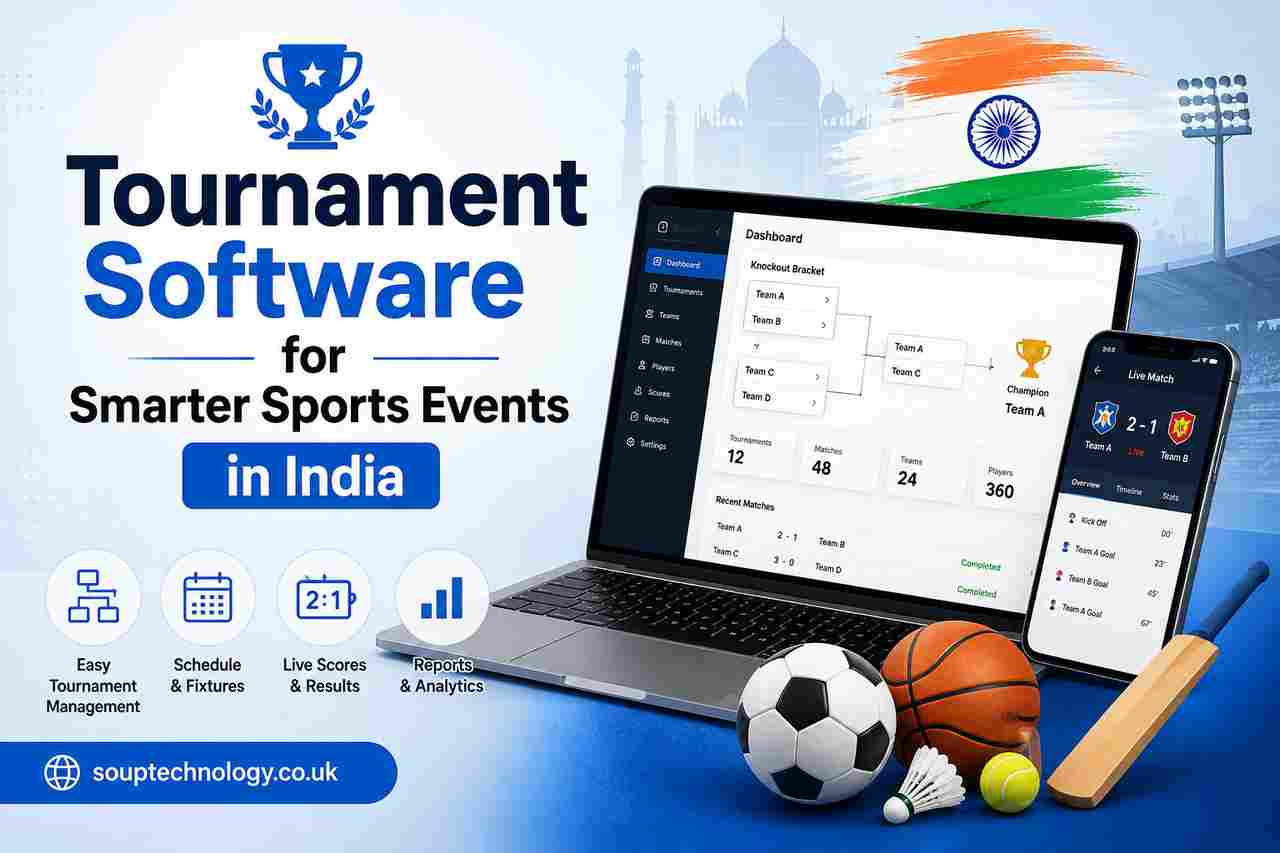
If you organise a school competition, local badminton league, cricket tournament, chess event, or corporate sports day, tournament software can make the entire process easier to manage. Instead of relying on spreadsheets, paper registrations, WhatsApp updates, and manual score calculations, organisers can use one system to handle participants, fixtures, results, standings, and event communication.
For India’s growing sports ecosystem, this can be particularly useful for clubs, academies, schools, colleges, and community organisers running events with different formats and large participant lists.
What Does Tournament Software Do?
At its simplest, tournament management software helps organisers run competitions from registration to final results.
Typical features include:
- Online player or team registration
- Fixture and schedule generation
- Knockout, league, and round-robin formats
- Live scores and result updates
- Automatic standings and rankings
- Team and player profiles
- Payment or registration tracking
- Match notifications
- Reports and downloadable results
The exact features vary between platforms, so organisers should choose software based on their sport, event size, and competition format.
For example, a badminton academy conducting a weekend competition may need court scheduling and player brackets, while a school sports meet may need team registration, points tables, and medal tracking.
Why It Matters for Indian Organisers
Sports competitions in India range from informal local events to structured state and national-level competitions. The Ministry of Youth Affairs and Sports highlights competition structures, talent development, and community sports as important parts of the Khelo India programme. Ministry of Youth Affairs and Sports – Khelo India
Digital administration is also becoming more relevant. The ministry’s annual report describes the National Sports Repository System as a digital platform for managing athlete information, competition-related data, facilities, and administrative processes. Government of India – Ministry Annual Report
For smaller organisers, the same principle applies on a practical level: keeping event information organised reduces avoidable administrative work.
Key Features to Look For
Flexible Tournament Formats
A useful platform should support the format you actually run. Common choices include single elimination, double elimination, round robin, league stages, and hybrid formats.
Chess organisers may also need reliable Swiss-system pairing. FIDE’s current rules specify requirements for Swiss pairings, including objective and reproducible pairing procedures. FIDE Swiss Tournament Rules
Simple Registration and Payments
Participants should be able to register without lengthy forms or complicated instructions. For paid events, integrated payment tracking can also help organisers identify confirmed entries and outstanding registrations.
Real-Time Results
Players and spectators increasingly expect quick access to fixtures, scores, and standings. Publishing results through a central platform reduces repeated questions and helps everyone follow the competition.
Mobile-Friendly Access
Many Indian participants will check match timings and results from smartphones. A mobile-friendly interface is therefore more useful than a system designed primarily for desktop administration.
Practical Example: A College Badminton Event
Imagine a college organising a 64-player badminton singles tournament.
The organiser can collect entries online, divide players into brackets, generate matches, assign courts, record results, and automatically update the next round. Players can then check their match time without repeatedly contacting the organising committee.
The same approach can work for football leagues, kabaddi competitions, table-tennis events, chess tournaments, and corporate sports days.
How to Choose the Right Platform
Before selecting a solution, consider the number of participants, sports supported, tournament formats, payment requirements, reporting options, and technical support.
A small academy may only need registration, scheduling, and results. A larger sports organisation may require multiple venues, administrator permissions, live scoring, analytics, and participant databases.
Do not choose a platform simply because it has the longest feature list. The better option is usually the one your organising team can learn and operate quickly.
FAQs
Is tournament software suitable for small events?
Yes. Even a small competition can benefit from easier registration, scheduling, and result management, although the organiser should avoid paying for unnecessary enterprise features.
Can it manage different sports?
Many platforms support multiple sports, but capabilities vary. Check whether the specific scoring and competition formats required by your sport are supported.
Can schools and colleges use it?
Yes. It can be useful for inter-house competitions, annual sports days, college leagues, and multi-sport events.
Is it better than using Excel?
For very small events, Excel may be sufficient. As participant numbers, rounds, venues, and updates increase, a dedicated system can reduce manual work and make information easier to share.
Conclusion
The right tournament software does more than create brackets. It brings registrations, scheduling, scoring, standings, and communication into one organised workflow. For Indian schools, academies, clubs, colleges, and event organisers, choosing a simple and reliable platform can make competitions easier to run while giving participants a better experience.